


Autism Spectrum Disorder

Internationally Certified ABA Training Programs with 100% RBT Exam Passing Rate
Behavioral Teaching Solutions (BTS) is committed to delivering high-quality, internationally aligned training in Applied Behavior Analysis (ABA). Our programs are designed to meet evolving global standards for certification and professional development in the behavioral sciences.
Whether you are just beginning your journey or expanding your expertise, BTS equips you with the tools, knowledge, and network to create lasting, positive impact—locally and globally.
| Feature | BACB | QABA |
|---|---|---|
| Credential | BCBA® – Board Certified Behavior Analyst® | QBA® – Qualified Behavior Analyst® |
| Education Requirement | Graduate degree (Master’s or higher) in behavior analysis or related field | Graduate degree (Master’s or higher) in behavior analysis or related field |
| Scope of Practice | Independently assesses, designs, and supervises behavior programs | Same – independently assesses, plans, and supervises ABA services |
| Settings Served | Home, school, clinic, and community-based environments | Same – across various settings including homes, schools, and clinics |
| Supervision Role | Supervises BCaBAs and RBTs | Supervises QASP-S® and ABAT® |
| Technician Certification | RBT® – Registered Behavior Technician® | ABAT® – Applied Behavior Analysis Technician® |
| Mid-Level Certification | BCaBA® – Assistant Behavior Analyst (Bachelor’s level) | QASP-S® – Qualified Autism Services Practitioner-Supervisor® |
| Credentialing Board | Founded in 1998, widely recognized globally | Established in 2012, with strong emphasis on autism services, trauma-informed and culturally responsive care |
| Website | www.bacb.com | www.qababoard.com |
Both BCBA® and QBA® professionals:
Key Difference:
While both certifications are rigorous and grounded in behavior science, QABA places additional emphasis on culturally responsive, trauma-informed care and services for individuals with autism and related needs, which may align more closely with certain service goals.
For more information, please visit


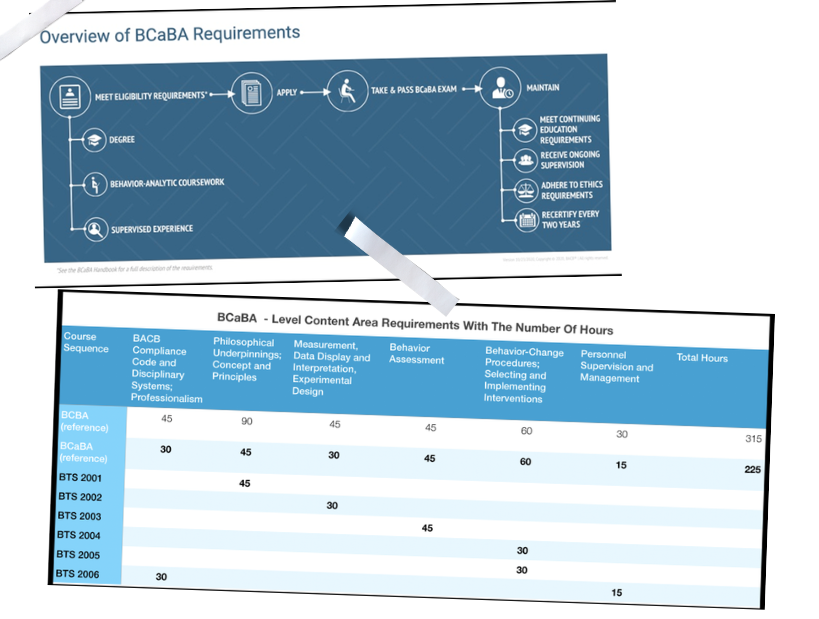
A Board Certified Behavior Analyst® (BCBA®) is a highly trained professional with graduate-level certification (master’s or doctoral degree) in behavior analysis. BCBAs are qualified and well-trained to independently assess behavior, design effective interventions, and support individuals in achieving meaningful behavior change.
They often work with children and adults across a variety of settings—including homes, schools, and clinics—helping individuals build new skills and reduce behaviors that interfere with learning and quality of life. In addition to providing direct services, BCBAs also supervise and train other team members, such as Board Certified Assistant Behavior Analysts® (BCaBAs®) and Registered Behavior Technicians® (RBTs®).
For more details, visit the Behavior Analyst Certification Board (BACB®) at www.bacb.com.
What is a QBA®, QASP-S®, or ABAT®?
The Qualified Applied Behavior Analysis Credentialing Board® (QABA®) offers three professional certifications for individuals working in the field of behavior analysis: the Qualified Behavior Analyst® (QBA®), the Qualified Autism Services Practitioner-Supervisor® (QASP-S®), and the Applied Behavior Analysis Technician® (ABAT®).
These credentials recognize professionals trained to support individuals with autism and other developmental, behavioral, and learning needs through evidence-based behavioral strategies.
Each certification upholds high standards of ethical, culturally responsive, and trauma-informed care.
To learn more about these certifications, visit the QABA Board® at www.qababoard.com.